
If 2020 taught us anything, it is to expect the unexpected. And to always be prepared.
Having a sick child while traveling is bound to happen to you at some point. It’s not a matter of if, just when.
Traveling takes a toll on our bodies, from the changes in schedule and sleep patterns, to the new diet and atmosphere, and of course the exposure to boatloads of germs. There is a good chance that someone in your family might become sick while traveling.
Illness aside, injuries are also a common occurrence on vacation. Whether you consider your family adventure travelers or not, chances are you’re in new and sometimes unexpected circumstances when you travel, and that can unfortunately lead to injury.
So what do you do when your kid gets hurt or sick while traveling?
Preparation is key.
Perhaps you’re reading this because you already have a sick kid on vacation, and this point is moot. Feel free to scroll on down, and I feel your pain! I’ve been there, and I was not prepared ahead of time.
But maybe you are thinking ahead, in which case there are a lot of things that you can do to prepare for the possibility that somebody gets sick or injured on your trip:
Talk to your doc.
Have a chat with your child’s pediatrician before your trip. Find out if they offer a 24-hour international hotline service. You might need to call at very weird hours with a time zone difference.
Your doctor’s office might even offer a travel doctor consultation service, as our pediatrician does. This is a pre-travel consultation where she gives us tons of helpful information about safety and health specific to the region we are traveling to. Even as a seasoned traveler, I utilize this service before every trip!
Get those travel vaccines.
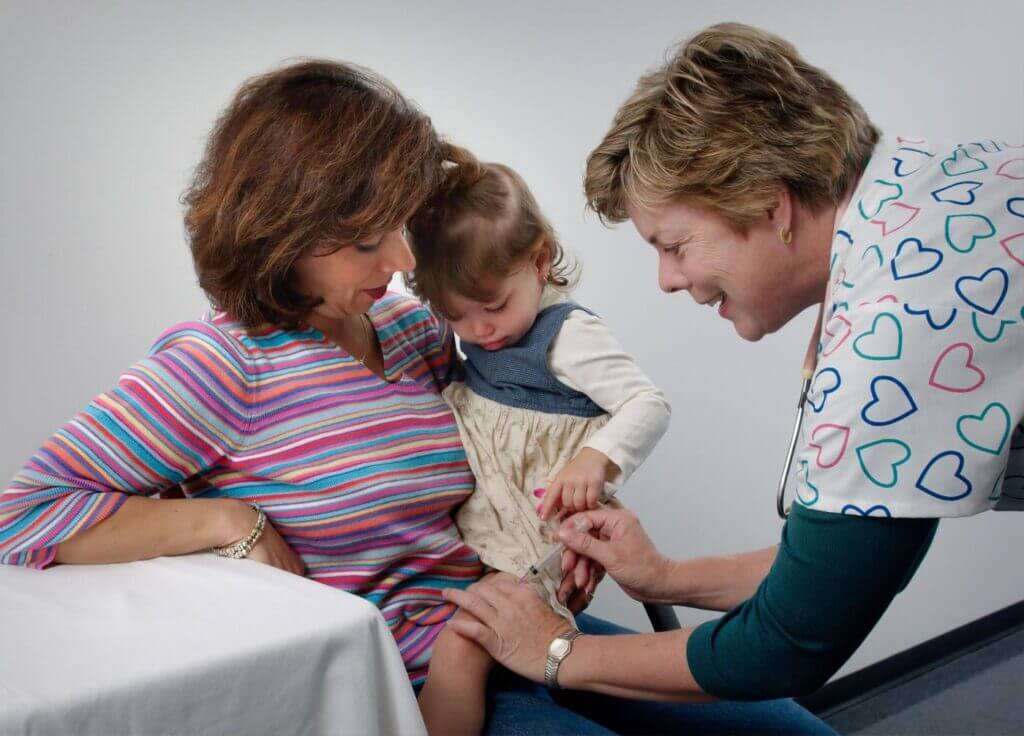
It’s imperative that you know which vaccines to get before you travel. Some are optional, some are super important, and some countries won’t let you in without proof of vaccination. Look into this well ahead of time, as some vaccines need to be given a month before you leave.
Bring a well-stocked first aid kit.
The hardest medications to find when traveling are ones that are in the correct dosage for young children or babies. And what’s worse is being in a non-English-speaking country and not knowing with 100% certainty that the medication you’ve just been given at the drugstore is the right dose for your baby.
Bring correct dosage medications for your children with you from home. It will save you a massive headache. Bring a pain reliever, diarrhea medication, motion sickness, and whatever else you might need. If your child is old enough for chewables, great. But remember that medication is exempt from the TSA 3.4oz rules, so if you need to bring through a bottle of children’s Tylenol, do it.
And keep it in your carry on so you have it with you at all times!

YOU MIGHT ALSO LIKE
You can buy a little travel first aid kit to get started with things like band aids and what not, but then add your child meds in with it.
Remember to pack any prescription meds in their original packaging and with documentation. We have not yet been asked to produce any documentation for my daughter’s rescue medication, but we always have it with us. If traveling somewhere hot, read the packaging to see if you’ll need to figure out refrigeration to keep the prescription under a certain temperature.
Get travel insurance.
Most US insurance policies only cover you within the US. But be sure to check, because there are some that cover you worldwide. I am fortunate to be covered worldwide by our insurance, so I have not had to purchase travel insurance.
But I have talked to a ton of people who have, and who are incredibly thankful that they did it. A lot of times travel insurance is actually way cheaper than you expect, and being caught in an emergency situation without insurance could end up costing tens of thousands of dollars.
And I am not talking about the Trip Insurance that your airline tries to get you to buy every time you book a flight. I’m talking about travel health insurance. It can vary widely based on the plan you choose and the insurance provider you go with.
While I tend to err on the side of under-preparing (you’ll never see me pay extra to avoid change fees later), health insurance is too important when traveling with kids, especially. Read through the policies carefully – what they cover can vary widely. It has come to light lately that many, for example, explicitly exclude pandemic illness. (We’ll see if this changes in the future!)
If something comes up and you suddenly find yourself traveling with a sick child, you don’t want to be in a position of trying to decide if your child’s illness is serious enough to warrant going in to the ER if you know it is going to cost you thousands out-of-pocket.
Know your destination.
At the same time, depending on where you are traveling, that ER visit might not cost that much anyway. Many countries provide their free or heavily subsidized healthcare to everyone, including tourists. It is worth knowing ahead of time if the place that you are traveling is likely to cost and arm and a leg if you do end up traveling with a sick baby.
If you are not an American, but traveling to the States, please prepare yourself for absolute healthcare sticker shock, and make sure your insurance covers you.
Map out the hospitals.
Before you leave, have an idea where the nearest ER, urgent care, and pharmacy are. Internet can sometimes be spotty. You never know when you won’t be able to connect to the cell service. It’s best to have that information saved somewhere accessible before you leave.
You will also want to write down the emergency phone number for the country – whatever the equivalent is for 911 (US) or 112 (EU), essentially.
What to do when your kid gets sick while traveling.
Okay, maybe you’ve prepared for this, and maybe you haven’t. But what now?
How would you treat this illness at home?
First things first, take a step back and think about what you would do if you were home. Cancel plans for the day and take it easy? Drink lots of fluids? Treat with over-the-counter medications? Then these are the things you should do while traveling, too.
Kids are resilient, but not so resilient that I would push through with a sick kid to try to still make our plans. Nothing that we have planned for the day is worth prolonging illness on vacation. While kids often bounce back fairly quickly from minor illnesses, they won’t have the chance to if they can’t rest and recuperate.

Call your pediatrician.
Hopefully you know how to contact your pediatrician, even if it’s after hours. If not, take a minute and look it up. Most offices have some way to contact them, even if you are out of the country.
If that fails, you have other options. A lot of insurance programs have 24-hour nurse hotlines that you can call. And if you’re staying at a hotel or resort, they will be able to connect you with a local doctor.
It’s always a good idea to check in with your pediatrician, even if you think you know what’s going on. You might already be treating the illness or injury, but you should still check in just in case. There might be signs that you wouldn’t know to watch out for.
What if you need medications?
Hopefully you brought your first aid kit with correct child dosages. But what if you didn’t, or you need something that you didn’t bring?
It’s very important that any medications that you buy come from a licensed pharmacy – not from a stall in a market. In developing countries, counterfeit medicine is a huge problem. If in doubt, contact your nearest embassy or consulate (here is a list of US embassies). They can connect you with a trustworthy doctor or pharmacy.
Ask any and all questions of the pharmacist, double-check that the active ingredient is the same as what you would give at home, and use a translator app on your phone if you need to. It is imperative that the pharmacist understands that you need a child or baby dosage.

Be smart about water and fluids.
Not all water around the world is safe to drink. Hopefully you already know whether the water where you are staying is potable (which means safe to drink). If you’re not sure, stop drinking tap water and do a google search to see if the water where you are is potable. Just because locals drink it does not mean it is necessarily safe.

YOU MIGHT ALSO LIKE
Even if the water is safe to drink wherever you are, it is super common to get tummy trouble from drinking water that you are not accustomed to. This is true even traveling to different regions within the US, and can happen no matter where you are and how good the water is there. All tap water has some level of microbial activity, and your body is used to the microbes of your local water.
If you’ve been drinking the tap water, even if it’s potable, its possible that could be causing stomach distress. Consider switching to sealed bottled water until the illness passes, or for the rest of the trip. Note that in some places in the developing world, tap water is sold in reused bottles as “bottled water”. Opt for brands you recognize and ensure that bottles are sealed.
In areas with unsafe water, make sure that you are taking extra precautions. Don’t brush teeth, make formula, rinse veggies or do dishes with unboiled tap water. Watch out for ice in drinks from smaller establishments that might not use filtered ice, and watch out for produce that was likely rinsed in tap water.
It’s nearly impossible to eliminate the risk of contamination from water when you’re out and about, but if you’re quarantining when your kid gets sick on vacation, you can really ensure that you’re careful about everything that is consumed until he or she is better.
What happens if you need to go to the ER?
Emergencies happen all over the world, and the good news is that anywhere you’re likely to travel with you kids is likely to have adequate healthcare to take care of whatever comes up.
In a life-threatening medical emergency, obviously do not hesitate to call emergency services. Throughout the Americas, 911 is the emergency number. Most of Europe and Asia use 112. Either of these will work in many countries, but you should look it up ahead of time to be sure.
If an emergency is not life-threatening, consider taking a taxi to the nearest ER. Depending on where you are in the world, an emergency room visit might be expensive, it might be cheap, or it might be free – as in much of the EU. If you’re an American, you can pretty much bet that it will be significantly less expensive than what you’re used to seeing at home, no matter where you go.
That being said, in many places you’ll need to pay out of pocket for any treatment and deal with insurance reimbursement later. It is always a good idea to call the number on the back of your insurance card on the way to the hospital to figure out what to expect.
Give the recovery an extra day.
Once your baby seems to be back to normal, you might feel anxious to get back out and resume the fun that you had planned for this trip. But remember that sometimes kids regain their energy before they have really finished fighting whatever bug they’ve got.
You don’t want to risk a relapse that will end up costing you more of your trip (not to mention your child’s happiness!), so give it a day longer than you think you need to on the recovery.
What about flying with a sick child?
What happens if your little one gets sick just before a flight? Maybe even just before your flight home?
The ideal answer is that you should reschedule your flight until everyone is healthy. But in the real world, that’s not always doable.
I’ll add the caveat that if anyone in your family has something highly contagious, please do call your airline and ask if they will allow you to reschedule your flight because of the illness. This is especially true in our new pandemic era, and there is no point risking getting everyone around you sick. In the case of Covid, of course, when a negative test is required, you will be forced to reschedule.
But what about for minor illnesses?
Flying with a sick toddler or older child is not fun, but you can help by ensuring you have proper medications for comfort, timing them so that your little one feels at their best for most of the flight, and providing as much love and comfort for the flight as you can. This might mean more movies, more snacks, or just some extra sympathy knowing that your child feels icky. I also recommend making sure that you have delicious but filling and healthy snacks. My favorite airplane snacks for toddlers (or older kids!) are here.
Bring along your child’s mask (and maybe some extras if there is a runny nose involved) to help keep the passengers around you protected from the illness.
If you are flying with a sick baby, things are a little trickier. Sick babies are a lot harder to comfort, and when you add the potential for ear pressure, things could get pretty stressful. If you are breastfeeding, prepare to breastfeed as often as possible for baby’s comfort, ear pressure, and to help with crying.
Give any baby-dose medications just before the flight, and bring them along to administer again at the appropriate time. It probably is not going to be your family’s best flight ever, but just keep in mind that it is temporary and do whatever you can to make your baby comfortable.
Travel is unpredictable. Kids are unpredictable. Illness and injury happen, and happen all the time while people are traveling. With a little preparation, and a level head when difficulties arise, you can get through it and hopefully preserve what’s left of your vacation!
Please feel free to drop any questions about what to do when your child gets sick on vacation, experiences, or resources in the comments!
to pin for later:
Photos are mine, or used with permission from the CDC, the National Cancer Institute, and Alexander Popov on Unsplash.
Originally published July, 2020. Updated May, 2022.








11 thoughts on “Sick Kid on Vacation: How to Deal When Your Baby Gets Ill”
So important to know all of this at a time like now. There is no way t o prepare for a child getting sick while travelling but knowing how to deal with it is super important!
I don’t have experience travelling with kids but I can imagine having a sick child while travelling would be a challenge. But if you keep a cool head, things can be solved. It’s great to see that you are prepared and ready to handle the emergencies…
Yes, we weren’t always! We have learned our lesson, haha.
Parents especially would be very grateful to know this information. I can imagine the worry they might have even more so when travelling if they become ill or have an accident. Peace of mind to be prepared is a great safety net for parents.
Traveling with kids is stressful enough without the added stress of illness!
It must be so stressful to have a kid poorly whilst travelling and especially if you are overseas and things are a bit unclear. I think as you said preparing beforehand just in case is the best way to be sure you can act quickly and hopefully get them on the mend and ready to enjoy the rest of the trip.
Yes, it is so stressful! Thankfully we’ve always managed to find what we need, but we have learned our lesson and will bring medicine along in the future!
So true about a well-stocked first aid kit – super important not just for kids, but for adults too. The one time we went without it on a trip to Australia, I fell sick and we had to spend so much on medicines! Thank god for travel insurance that saved us.
Yes, that is so true! Travel first aid kits can save you so much time and money.
Hey,
We are looking for travel insurance that is not just medical emergency, but actually health insurance (and maybe some belongings coverage) while we travel (hopefully a year in South America and Southeast Asia). We have not been successful in finding companies that offer this. Any suggestions?
Thanks,
Josh
Hi Josh! I am not the right person to ask, unfortunately. We are lucky enough to have worldwide medical, so I have never had to shop for it. And I am not comfortable recommending anything I haven’t used myself. 🙂